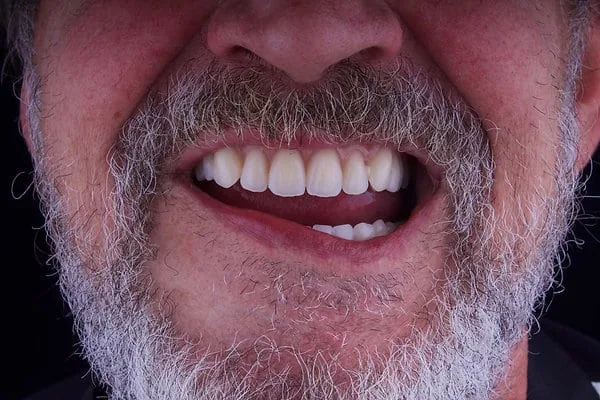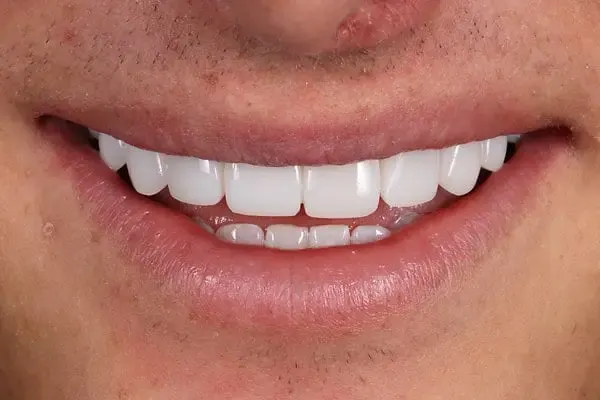



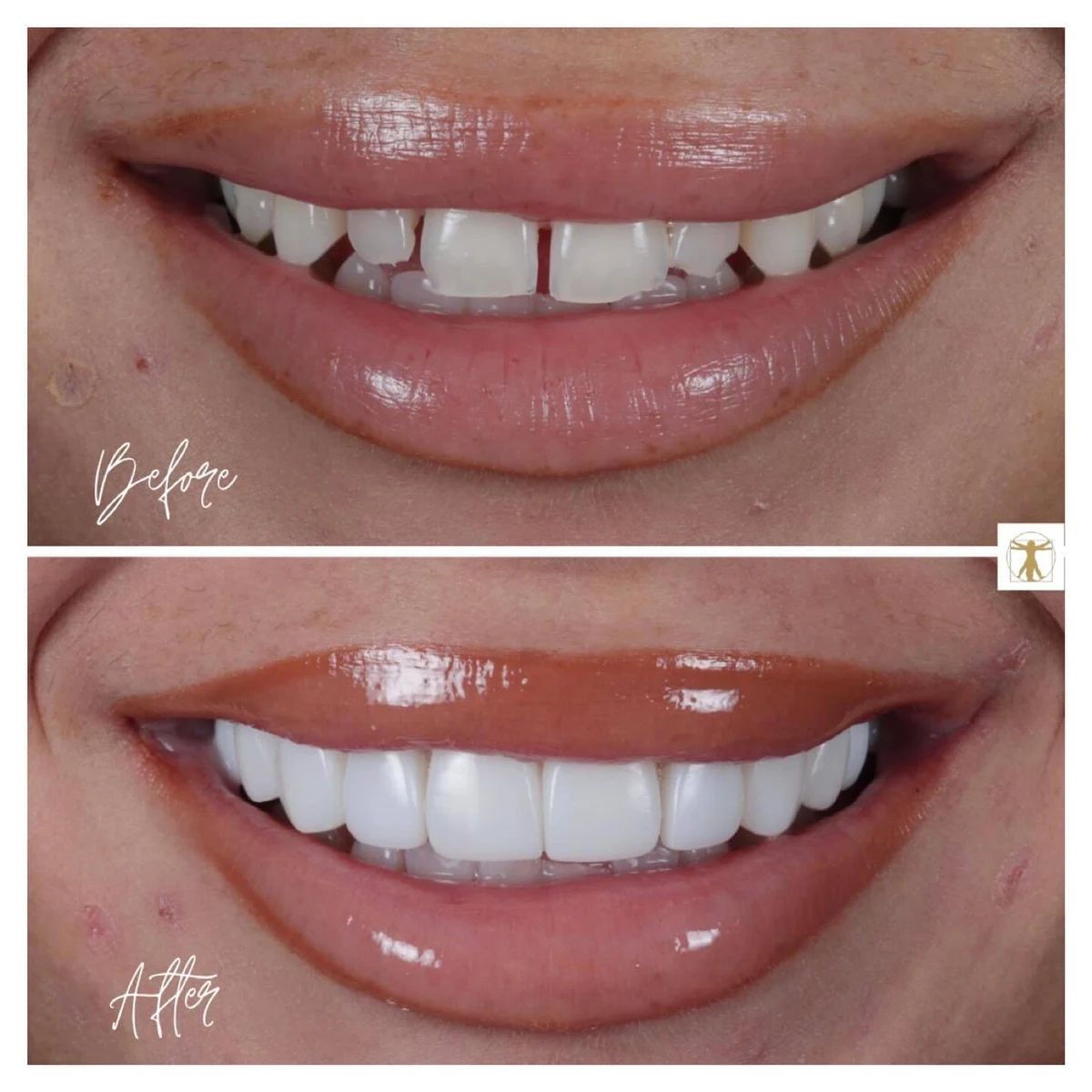
The best way to maintain composite bonding is to combine good daily cleaning with regular professional care designed for composite. Looking after your bonding is about more than keeping it shiny: the surface, the edges where it meets your teeth and the surrounding gums all deserve attention.
At Vitruvian Dental Studio, our Composite Servicing Appointment brings that care together. It includes a tailored clean, specialised Airflow polishing, our diamond-polishing protocol and suitable small chip repairs. The appointment is exclusively for composite bonding placed by Vitruvian.
Why does composite bonding need specialist maintenance?
Composite is a tooth-coloured resin, not natural enamel. Over time, its finish can become dull or stained, and small areas of wear or chipping may develop. The right maintenance helps preserve the result while giving your clinician an opportunity to identify changes before they become bigger problems.
The margins are the edges where the composite meets your natural tooth. Cleaning around these areas matters, but so does protecting their shape and integrity. Cleaning or polishing with unsuitable instruments, powders or techniques can roughen the surface or affect the margins. That can make the bonding harder to keep clean and may contribute to earlier repair or replacement.
This does not mean every routine hygiene appointment will damage bonding. It means your clinician needs to recognise the material and adapt the approach.
What happens at our Composite Servicing Appointment?
Because we carry out so much composite bonding at Vitruvian, maintaining it is an important part of our everyday care. We have developed our own Vitruvian polishing protocol around the materials and finishes we use. It is a dedicated composite-care appointment, not simply a standard polish applied to every surface in the same way.
1. A clean tailored to your smile
We clean your natural teeth and bonded surfaces with an approach selected for your composite. Attention to plaque around the gumline and the bonding margins supports your daily cleaning and helps keep the surrounding gums healthy.
2. Specialised Airflow polishing
We use specialised Airflow polishing on the composite, selecting an appropriate powder and technique for the bonded surfaces. This helps remove surface deposits and staining before the next polishing stage. Not all air-polishing powders are interchangeable, which is one reason experience with composite maintenance matters.
3. Our diamond-polishing protocol
Next, we refine the composite with Diatech Shapeguard, the diamond-polishing system we use at Vitruvian. Its silicone polishers contain diamond particles. Our Vitruvian protocol is designed to restore a smooth, polished finish while caring for the shape and edges of your bonding.
In research from King’s College London comparing five diamond-polishing systems on one composite material, Diatech Shapeguard achieved the lowest average surface roughness — in other words, the smoothest average surface in that laboratory test. The researchers identified Diatech Shapeguard and Komet Spiral as the two systems producing the lowest roughness values. This supports careful selection of a polishing system; it does not establish that one system is best for every composite or guarantee a longer lifespan.
4. Suitable small chip repairs
Small chips and areas of wear can be refined or repaired during the servicing appointment where suitable, within the applicable appointment and repair terms. Your clinician will confirm what can be treated. Larger fractures, loose bonding or more extensive damage may need a separate assessment and treatment rather than routine servicing.
Can maintenance help bonding last longer?
Regular, tailored maintenance can help preserve the finish of your bonding and may reduce the need for premature replacement. Keeping surfaces clean and smooth, looking after the margins and addressing suitable small chips early are practical ways to care for your bonding.
Maintenance does not guarantee a particular lifespan: your bite, grinding habits, daily care and the condition of the underlying teeth all affect how long bonding lasts. Polishing alone cannot make damaged or failing bonding sound again.
How should you look after composite bonding at home?
- Brush twice daily for around two minutes with fluoride toothpaste, including last thing at night. For adults, choose at least 1,350ppm fluoride unless your dentist advises otherwise. Spit out excess toothpaste rather than rinsing straight away.
- Clean between your teeth every day with floss or appropriately sized interdental brushes. Ask the team to show you how to clean around your bonding and gumline.
- Avoid DIY polishing or filing. Ask us before using abrasive stain-removal products on your bonding.
- Protect against unnecessary biting forces. Avoid using your teeth to open packaging or biting hard objects. If you have been prescribed a bite guard, wear it as advised and tell us if it no longer fits.
- Keep up with dental reviews and your maintenance schedule. Servicing complements, rather than replaces, routine examinations and any gum treatment you need.
The daily cleaning advice above follows the NHS guide to keeping your teeth clean. For staining and colour changes, our separate guide explains whether you can whiten composite bonding.
Annual maintenance with our Composite Aftercare Plan
Our Composite Aftercare Plan covers the composite servicing appointment as part of your annual maintenance, helping you keep ongoing care organised. Under the plan, the servicing appointment includes repair of up to two suitable small chips.
The plan also provides wider aftercare benefits, including a whitening top-up kit and bite guard replacement, subject to the plan terms and clinical suitability. See the current plan details or ask our team to explain your cover before joining.
Annual servicing is a useful part of your aftercare routine, but your clinician may recommend a different review or hygiene interval for your individual needs. Do not wait for your annual appointment if a margin feels rough, floss catches, your gums bleed persistently or you notice a chip, pain or loose bonding.
Can Vitruvian maintain bonding placed elsewhere?
We only provide this composite maintenance service for bonding placed by Vitruvian Dental Studio. That lets us provide continuity of care for the materials and treatment we have placed.
If you are considering new bonding — or your existing bonding needs replacing — arrange an assessment for composite bonding at Vitruvian. Having your bonding placed or, where clinically appropriate, replaced by our team allows us to look after it through our ongoing maintenance service. Sound bonding does not need replacing simply to access a maintenance plan; we will discuss what is appropriate for your teeth.
Book your composite servicing appointment
Already have composite bonding placed by Vitruvian? Book your Composite Servicing Appointment online, or contact our team for help with your maintenance. Tell us you are booking composite servicing so we can help you select the right appointment.